The role of Feedstock in Sustainable Bio-Based Products
What feedstock do we use, and how can we use it better?
The transition to sustainable bio-based products starts with this crucial question!
POLYMERS-5B is addressing this challenge by exploring alternative bio-renewable monomers derived from agri-food and wood-based feedstocks available in the EU. These include dicarboxylic acids, diamines, hydroxyacids, amino acids, fatty acids, aromatic and phenolic compounds, oils, and tall oil… key building blocks for a new generation of bio-based polymers and plastic materials.
From Waste to Value
Europe generates significant volumes of agricultural and forestry by-products every year. In 2021, the EU produced approximately 10.9 million tons of tomatoes for processing, generating tomato pomace (peels, seeds, and fibres) corresponding to 2–3% of the processed weight. Olive oil production reached 3.0 million tons, producing substantial quantities of olive pomace and liquid residues. Meanwhile, the European forest-based industry generates an estimated 25–30 million tons of tree bark waste annually.
Today, these streams are mainly used for low-value applications such as composting, biogas, fertilizer, or animal feed—or are incinerated or landfilled. This represents not only an environmental burden but also a significant loss of potential economic value.
Advancing the Chemical Platform Biorefinery Concept
POLYMERS-5B applies a zero-waste philosophy through the Chemical Platform Biorefinery concept. This approach enables the simultaneous extraction of:
- Bioactive compounds (antioxidants, polyphenols, carotenoids) for chemical, pharmaceutical, food, feed, and cosmetic sectors
- Valuable fractions such as fibres, proteins, and oils for chemical and biotechnological applications
- Monomers for the synthesis of innovative bio-based polymers
By valorising both primary and secondary streams, the project reduces monomer production costs, mitigates supply chain disruptions, and enhances resource efficiency.
Strong Industrial Collaboration
The project brings together research institutions and industry partners to ensure real-world impact. In particular:
- IST-ID collaborates with CONESA Portugal to valorise tomato biowaste.
- IST-ID collaborates with Cooperativa Agricola de Moura e Barrancos on reducing the environmental impact of olive oil residues and liquid effluents.
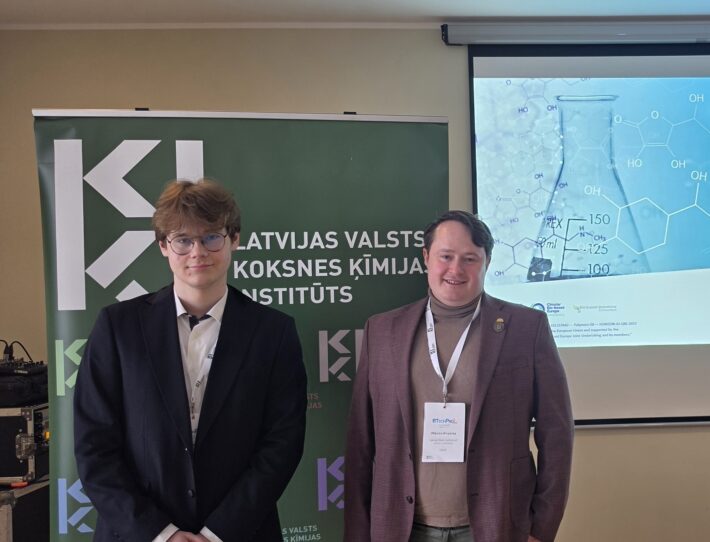
- The Latvian State Institute of Wood Chemistry (LSIWC) focuses on phenolic bark extractives and their use in polymerisation reactions.
- The Latvian State Institute of Wood Chemistry (LSIWC) works with Tall oil fatty acids from pulp production to synthesize thermoset resin components within the project framework.
Feedstock as a Strategic Lever
Selecting sustainable, locally available feedstocks is more than a technical decision: it is a strategic lever for Europe’s circular economy. By transforming agricultural and forestry by-products into high-value monomers and materials, POLYMERS-5B contributes to reducing waste, lowering environmental impact, and strengthening European bio-based value chains.
Feedstock is not just a raw material… it is the starting point of sustainable innovation.